

Refugio Gardens Botanicals
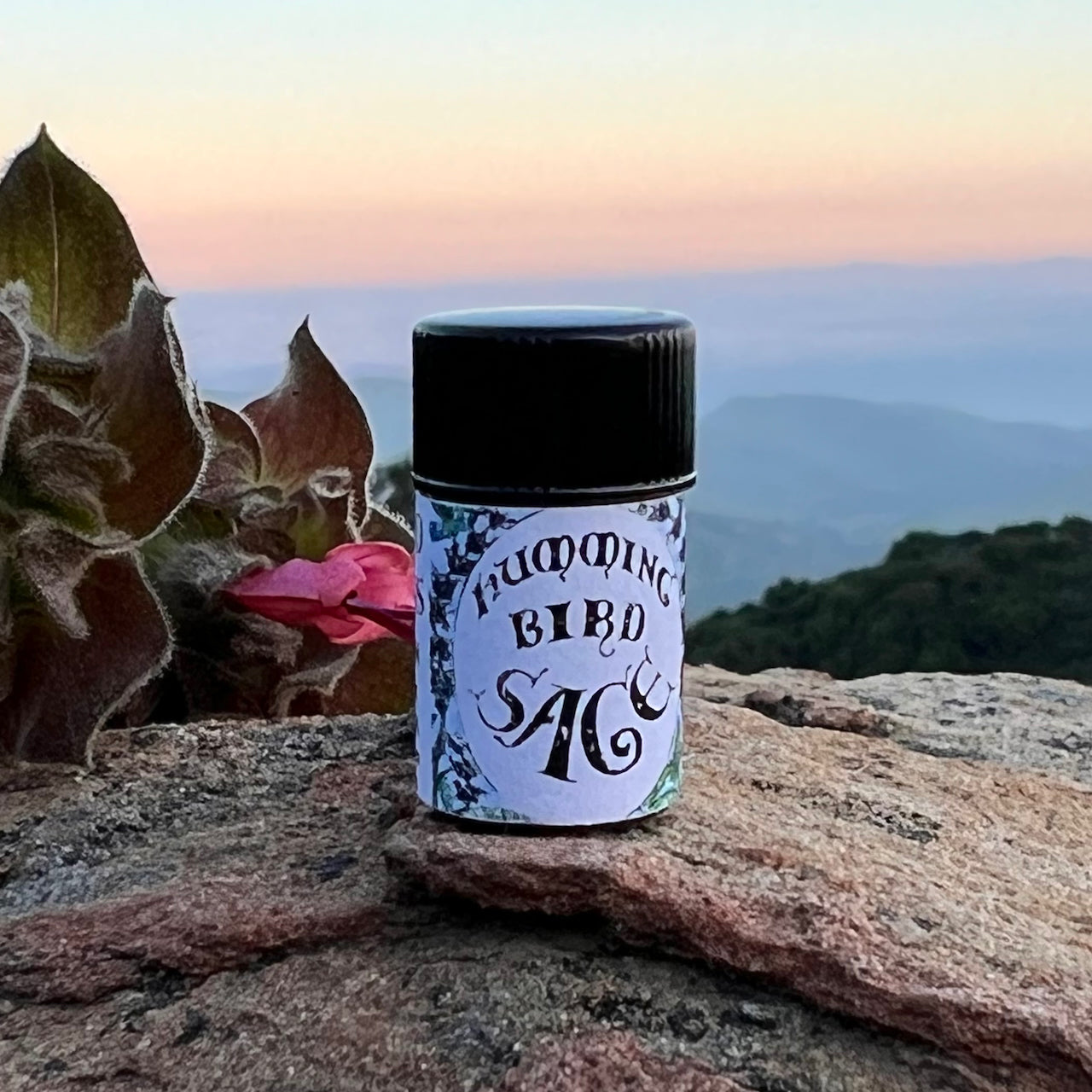
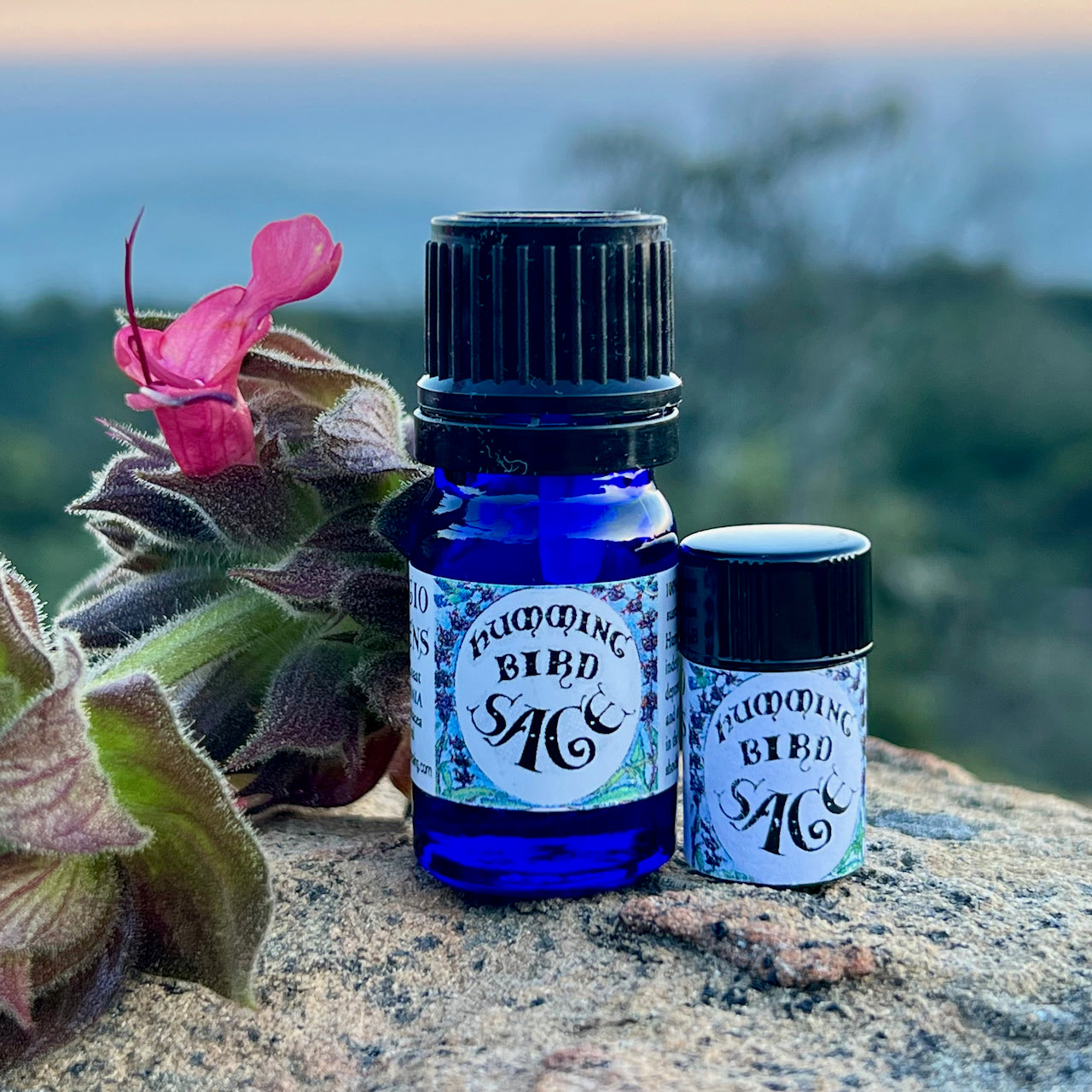
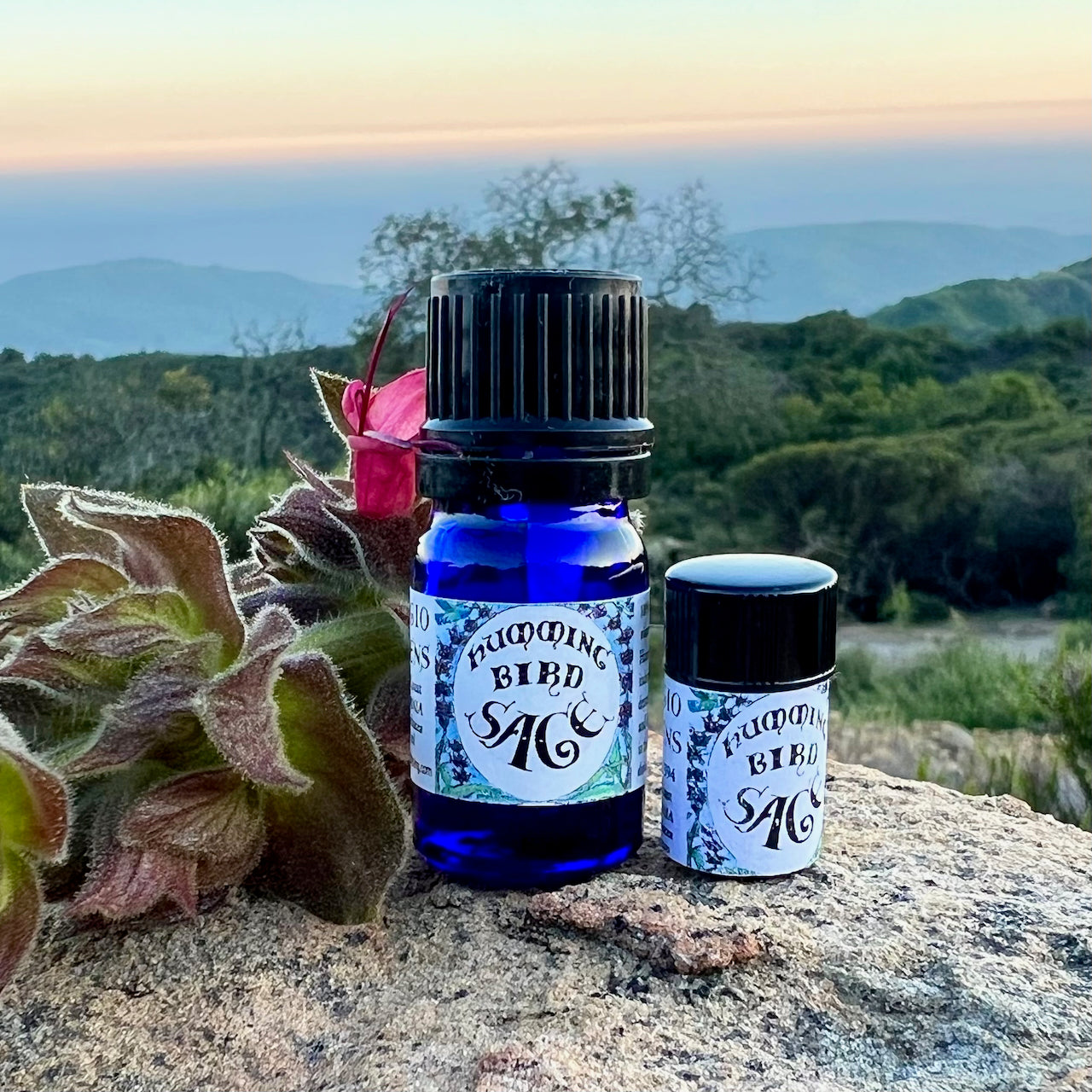
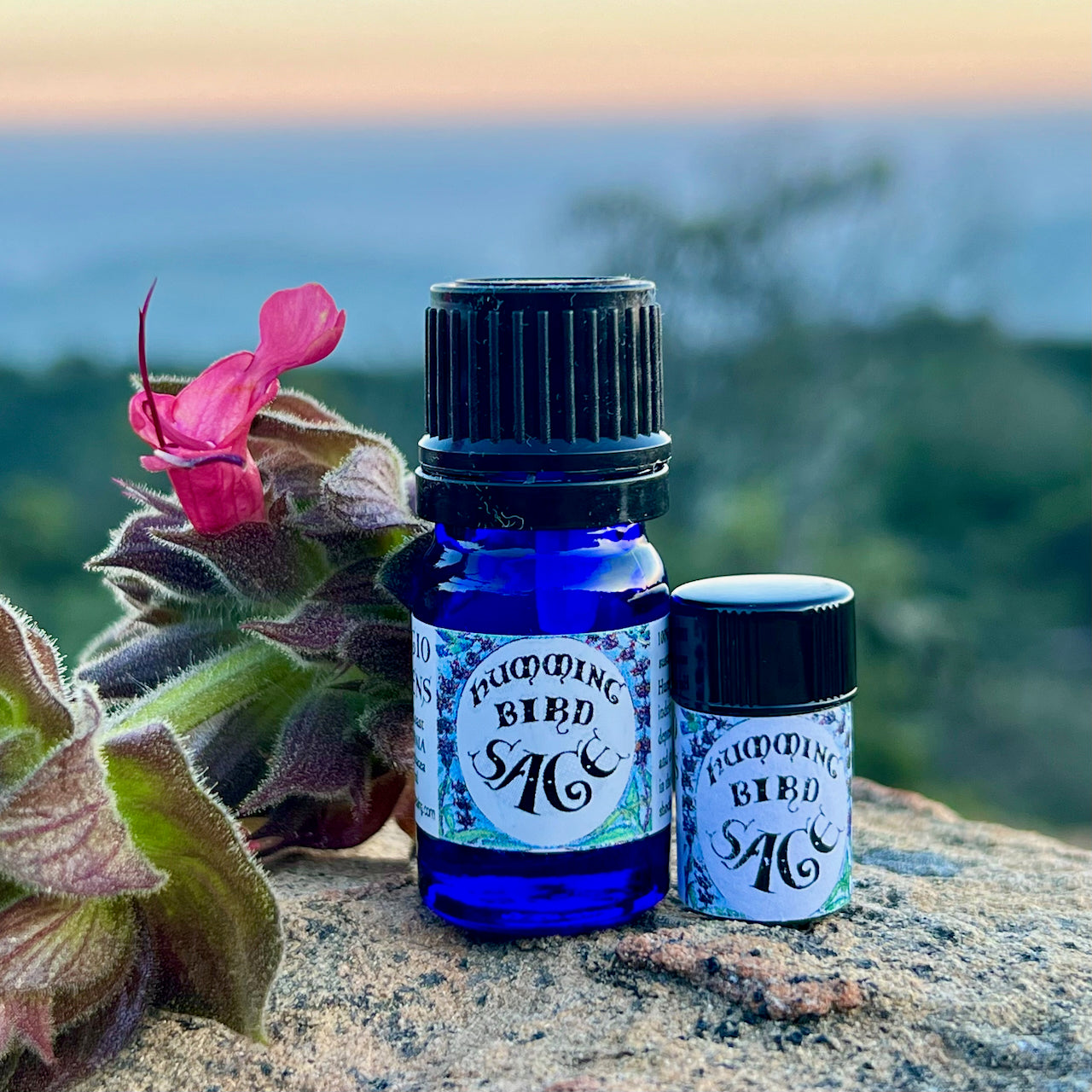
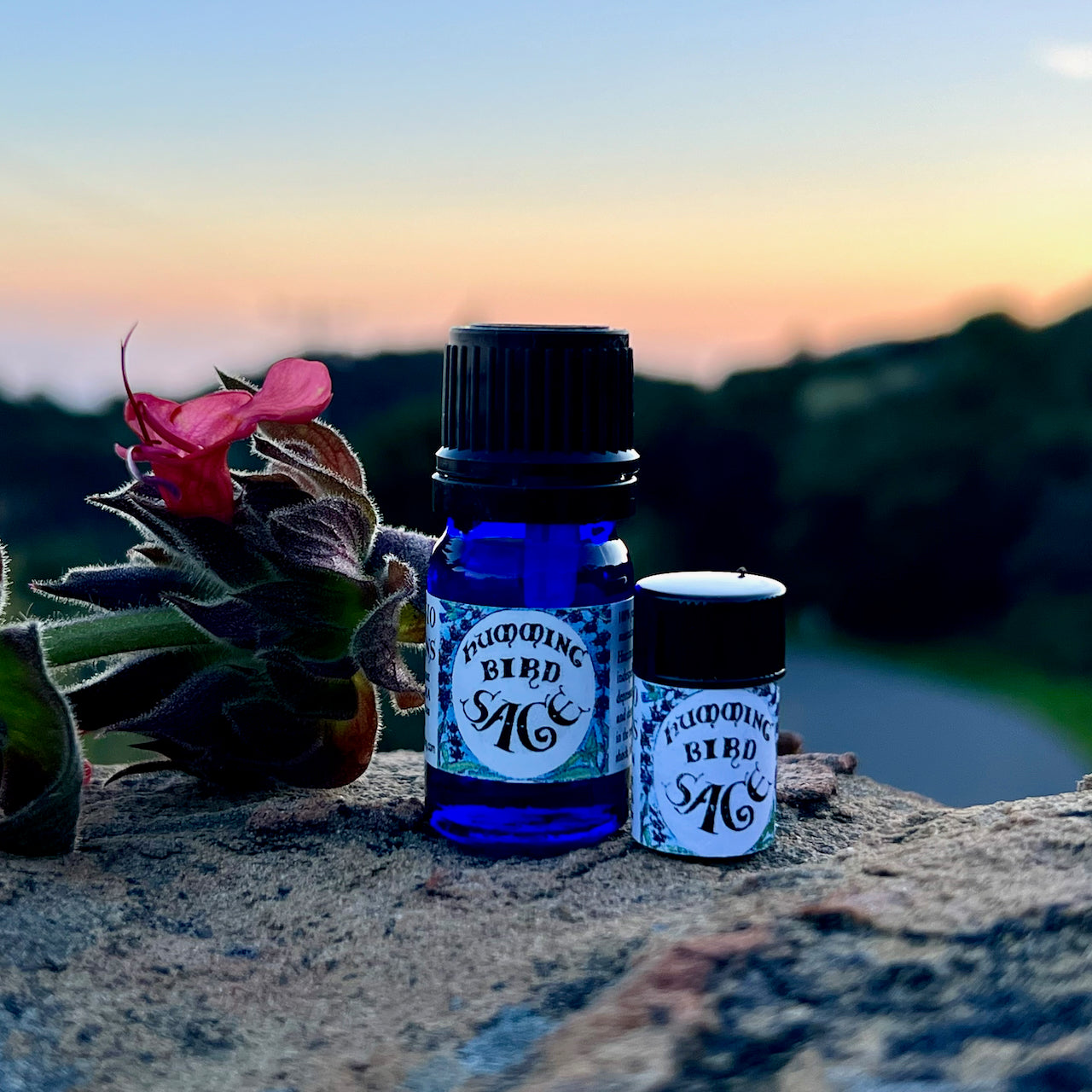
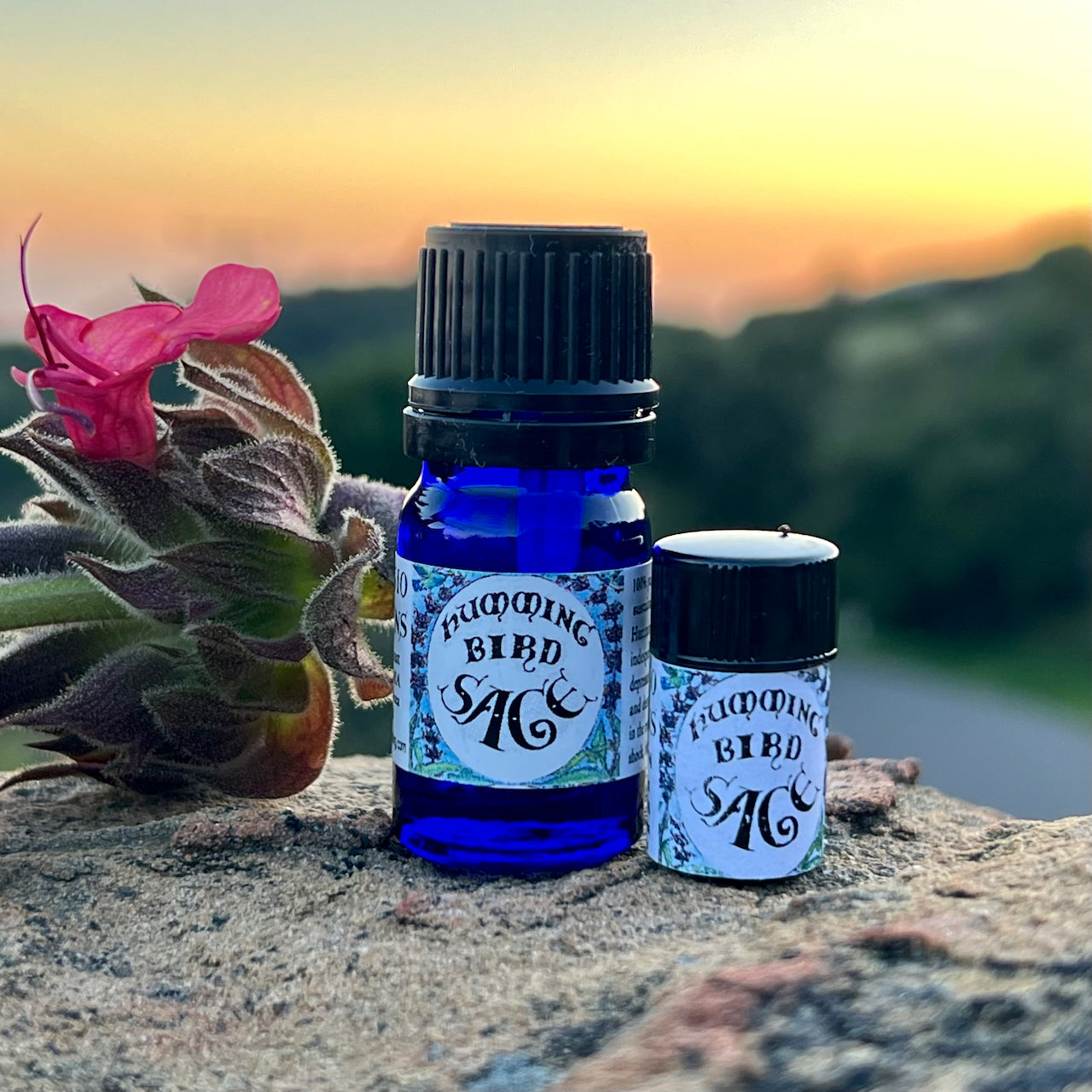
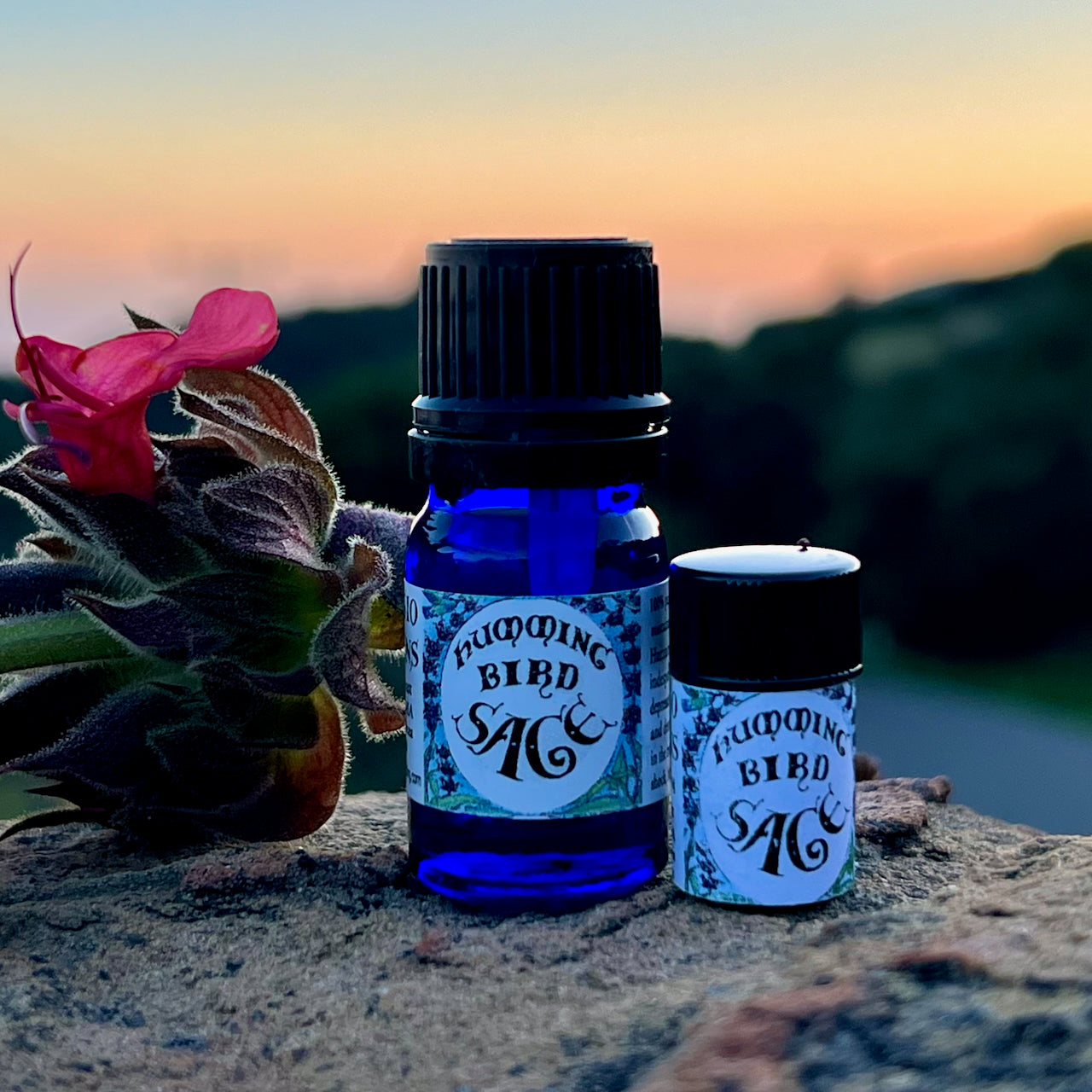
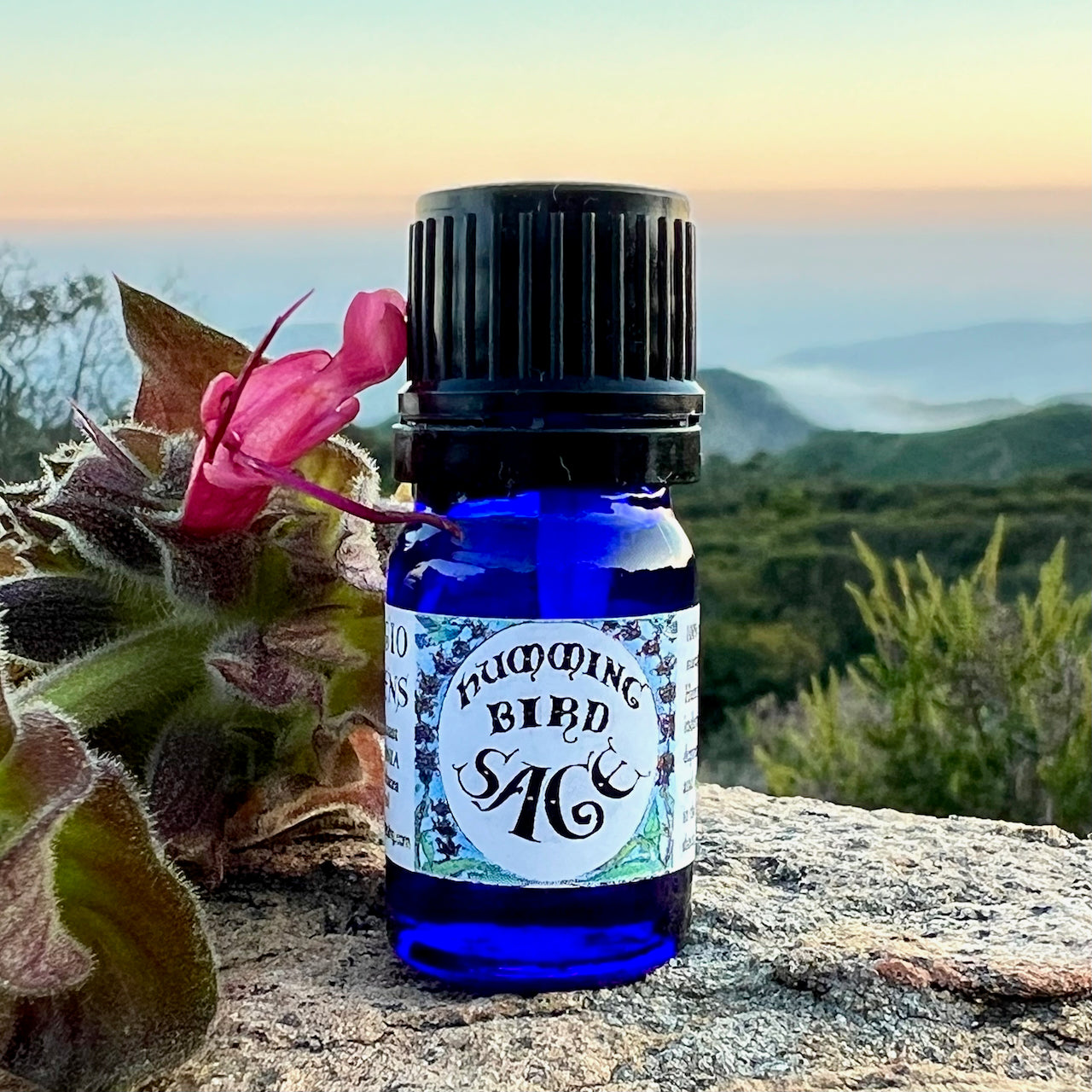
Hummingbird Sage Essential Oil – Sustainably Wild Grown, Artisan-Distilled, Pure & Genuine (Salvia spathacea)
Hummingbird Sage Essential Oil – Sustainably Wild Grown, Artisan-Distilled, Pure & Genuine (Salvia spathacea)
Couldn't load pickup availability
Hummingbird Sage Essential Oil
Salvia spathacea — "Herba Salviae Spathaceae"
Experience the Sweet-Green Spirit of California
Hummingbird Sage Essential Oil (Salvia spathacea) is a rare California native aromatic, cherished for its sweet, woody-green fragrance and calming, clarifying effects. Traditionally valued by Native Californians for easing fever, headache, and seasonal discomforts, it also supports relaxation, mood balance, and gentle respiratory clarity.
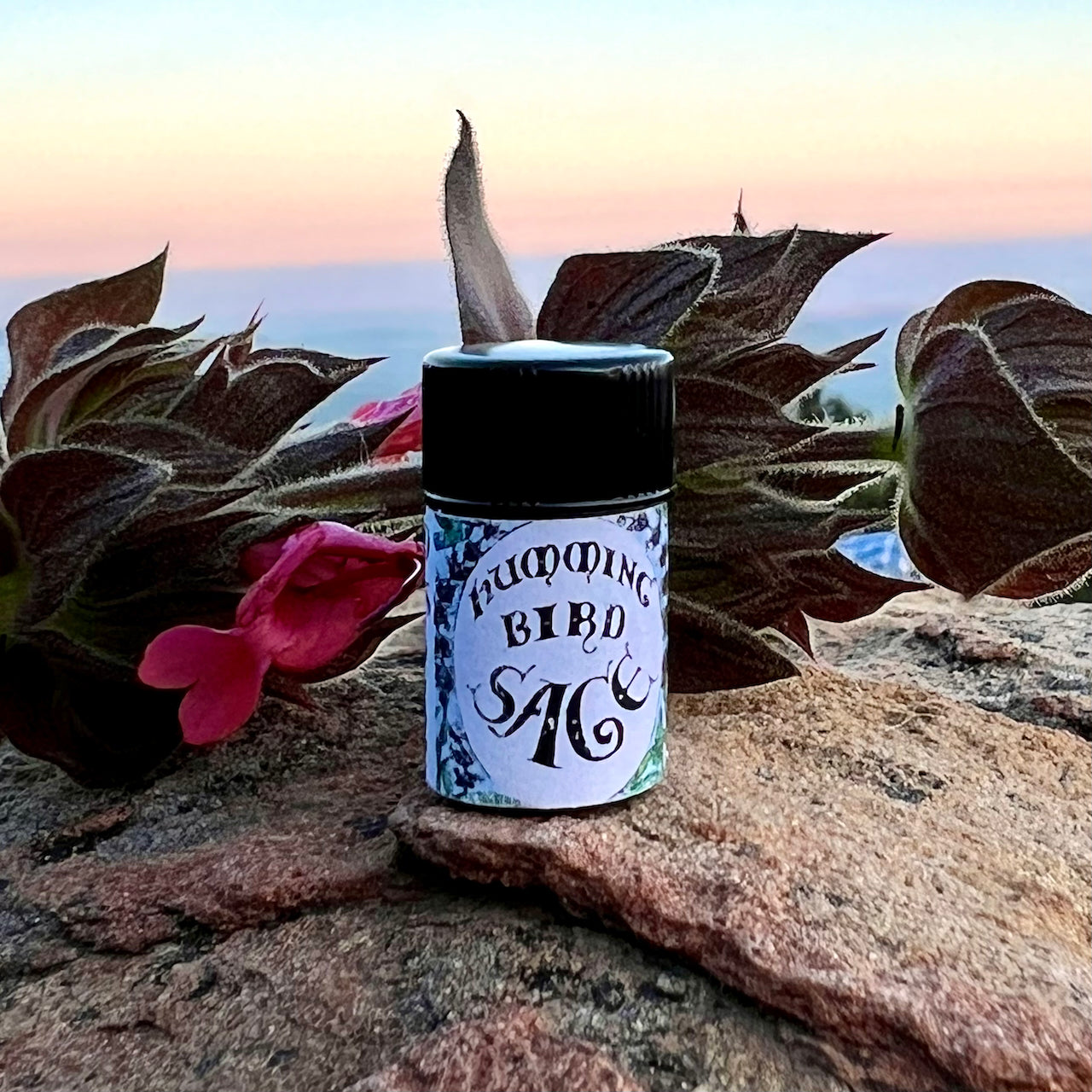
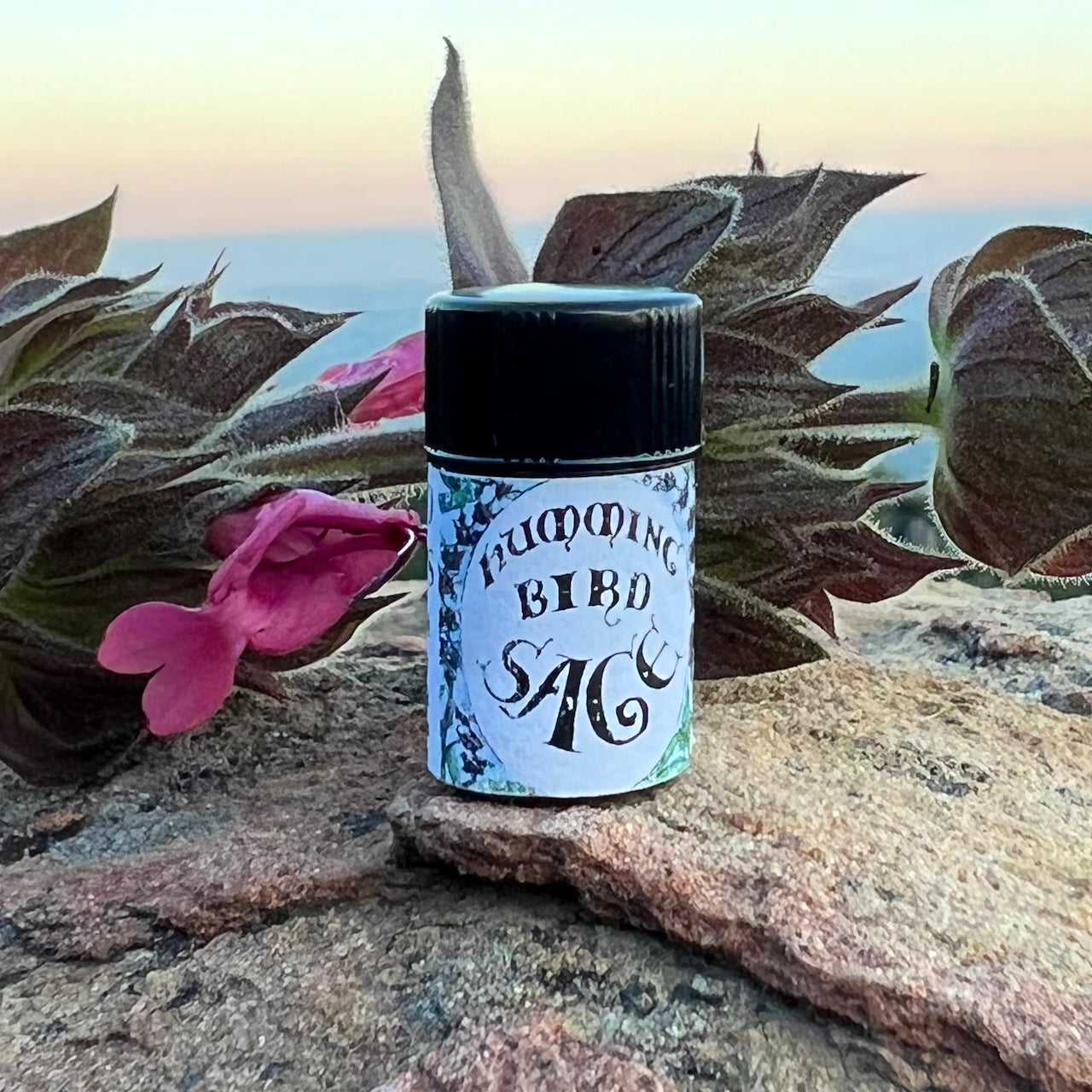
Sustainably wildharvested from plants grown on private ranch land and artisan-distilled in small batches at Refugio Gardens, each bottle carries the sweet-green essence of coastal chaparral where Anna's, Allen's, and Costa's hummingbirds dance among magenta blooms.
Aroma & Character
- Fragrance: Sweet, slightly woody, fresh green, with soft floral undertones and a clean eucalyptus-cooling heart
- Note: Middle
- Energetics: Calming, centering, uplifting — both grounding and expansive; settles the spirit without sedation
Perfume Note Breakdown (GC–MS)
Top Notes (0–15 min):
α-Pinene (8.83%) + β-Pinene (5.94%) → crisp pine, resinous, fresh.
Camphene (2.39%) → sharp, cooling, peppery-pine.
Limonene (2.17%) → sparkling citrus, slightly sweet.
1,8-Cineole (15.50%) → eucalyptus clarity, camphoraceous coolness.
Δ³-Carene (0.65%) → sweet pine with balsamic lift.
γ-Terpinene (2.64%) → lemony-green freshness.
Effect: Sparkling pine-eucalyptus opening with a fresh citrus–herbal snap.
Middle Notes (15 min–2 hrs):
(Z)-β-Ocimene (26.48%) + (E)-β-Ocimene (2.43%) → lush green-floral, herbal, slightly fruity.
Camphor (16.37%) → clean herbal clarity — gently stimulating yet calming to the mind ("calming clarity" in practice).
Myrcene (1.14%) → herbal, balsamic, green depth with documented sedative activity.
Terpinolene (0.50%) → sweet pine, lilac-like herbal freshness.
Linalool (0.23%) + α-Terpineol (0.38%) → soft lavender-lilac floral sweetness; both carry documented CNS-calming activity.
Verbenone (0.30%) → minty, green, slightly fruity-herbal nuance.
Effect: A bold, resinous camphor-herbal heart, lifted by ocimene's floral-green brightness and softened by lilac-floral sweetness.
Base Notes (2–6 hrs):
β-Caryophyllene (1.49%) → warm, spicy-woody, clove nuance; a selective CB2 agonist with anti-inflammatory research support.
Germacrene B (0.47%) + Selinadienes (0.57% + 0.45%) → woody, earthy-resinous grounding.
δ-Cadinene (0.27%) + γ-Cadinene (0.11%) → dry woody-balsamic depth.
α-Bisabolol (0.08%) → soft, sweet woody-floral, calming.
Nerolidol (0.06%) → mild floral-woody persistence.
Effect: Settles into warm resinous woods with gentle floral-balsamic undertones, lingering softly.
Olfactory Narrative:
A sparkling pine-eucalyptus top (pinene, cineole, limonene) with citrus lift.
A lush green-floral camphor heart (ocimene, camphor, linalool) that balances strength with sweetness.
A grounding woody-balsamic base (caryophyllene, cadinenes, bisabolol) adding warmth and persistence.
Discovery & Innovation
In 1997, Dr. Amy Inez Hazard performed what is believed to be the first steam-distillation of Salvia spathacea (Hummingbird Sage), revealing its sweet-green, resinous, calming profile for the first time as a pure essential oil. Today, Refugio Gardens remains the only known producer of genuine Hummingbird Sage Essential Oil, supported by GC–MS analysis.
Uses & Benefits
- Traditional support: headache, fever, and digestive irritation
- Emotional balance: calming for nervous tension — chemically plausible too: α-pinene (8.83%) gently modulates the brain's GABAA receptors, the same receptor class addressed by anti-anxiety medications, but softly rather than fully †
- Respiratory clarity: 1,8-cineole is a clinically studied mucolytic and bronchodilator; camphor is a trusted topical decongestant
- Mental clarity: inspires uplift, focus, and grounded expansion
- Topical comfort: properly diluted, a soothing aromatic rub for minor soreness — pine-mint family oils have a long history of topical use
Chemistry & Research
GC–MS analysis of our oil (Laboratoire PhytoChemia, 2023, Lot #323; 98.81% identified) shows a chemotype rich in:
- (Z)-β-ocimene (~26%) — antioxidant and antifungal signals; rare as a leading constituent in Salvia
- Camphor (~16%) — circulation and respiratory clarity
- 1,8-cineole (~15%) — anti-inflammatory, mucolytic, and airway-opening
- α-Pinene (8.83%) — a gentle GABAA receptor partial modulator upon inhalation, anchoring the oil's calming-without-sedation character
Notably, combined thujone is nearly absent (0.21%) — a dramatic departure from garden sage (S. officinalis, often 30–40%+), making this a distinct and unusually wide-margin chemotype: ocimene/camphor/1,8-cineole. Taken together, these constituents help explain the oil's reputation as both relaxing and clarifying — grounding the spirit while opening the breath. †
Sustainability & Harvesting
We follow strict ethical wildcrafting practices. Only the top leaves and flowers are gathered, encouraging regrowth with two to four blossoms emerging from each cut stem. Abundant blooms remain for pollinators — the hummingbirds and bees who are the true gardeners of this landscape. Choosing this oil supports both California ecology and artisan craft.
Safe Use Guidelines
- Dilute for skin: 9–13 drops per 1 oz (30 mL) carrier oil (2–3%); always patch test first
- Not for children under 6, and not on or near the face of children under 10
- Avoid during pregnancy for internal essential oil use; keep topical use brief
- Seizure disorders: avoid — camphor content lowers seizure threshold
- Do not take the essential oil internally; hydrosol and leaf tea are the traditional internal forms, in moderation
Experience Wild California
Hummingbird Sage grows in lush colonies across California's oak woodlands, bursting into magenta blooms that feed Anna's, Allen's, and Costa's hummingbirds. Its essential oil mirrors that same dynamic partnership: grounding yet expansive, antiseptic yet soothing.
Want to dive deeper? Read the full botanical profile in our blog: Therapeutics of Hummingbird Sage.
Hummingbird Sage FAQ
What is Hummingbird Sage essential oil?
An artisan-distilled oil from Salvia spathacea with a sweet, woody-green, calming aroma — traditionally used for fever, headache, and gentle respiratory clarity.
What makes your distillation unique?
In 1997, Dr. Amy Inez Hazard conducted the first known distillation of Hummingbird Sage EO. Refugio Gardens remains the only known producer of genuine, GC–MS verified Hummingbird Sage essential oil.
How do I use it safely?
Diffuse for a serene atmosphere and mood support. For skin use, dilute 9–13 drops per 1 oz (30 mL) carrier and always patch test. Do not take the essential oil internally, and never use it near the faces of infants or young children.
Why dilute an oil that smells this gentle?
Aroma and chemistry aren't the same thing — this oil's camphor content (16.37%) is high enough that dilution is the responsible default for topical use, especially for children, during pregnancy, and on the face.
Is it sustainably harvested?
Yes. We harvest selectively to encourage regrowth and preserve abundant blossoms for pollinators, then steam-distill in small batches at Refugio Gardens.
Disclaimer: For educational and traditional use only. Not intended to diagnose, treat, cure, or prevent any disease. Always patch test and dilute before skin use. Consult a qualified healthcare provider if pregnant, nursing, or under medical care.
Share
Safety & Cautions
Safety & Cautions
- Please be advised to keep essential oils out of reach of pets and children.
- Please avoid using photosensitive essential oils (Lemon, Lime, Grapefruit, Orange, Bergamot, Tangerine, Calm Shen Blend and any products made with these oils such as Santa Barbara Goldenbush Lotion) prior to going out in the sun or using a tanning booth as they can react to sunlight and cause something similar to a severe sunburn.
- It is advised to void continuous long term use of the same essential oils.
- Be sure to research the powerful effects of essential oils before use.
- Use diluted essential oils on the skin (Carrier oils like Jojoba are great for this in a 10% essential oil to 90% carrier base oil ratio).
- It is advised to patch test on a small portion of sensitive skin and discontinue if there is irritation or a negative reaction.
- Please know the safety data and specific warnings on an individual oil or Blend before using.
- And please use careful caution using essential oils during pregnancy. Any use should be approved by a medical provider.
- Its important to keep essential oils away from your eyes. If oil does get in your eye, do not flush it out with water. You can dilute the area immediately with vegetable or carrier oil by placing the vegetable oil on a tissue and gently wiping the eye area.
- Also essential oils are flammable so please avoid direct contact with flames such as candles.
- Please do not use essential oils internally unless properly trained and prescribed by a physician. If accidentally swallowed, call the Poison Control Center (1-800-222-1222) immediately and do not induce vomiting.