

Refugio Gardens Botanicals
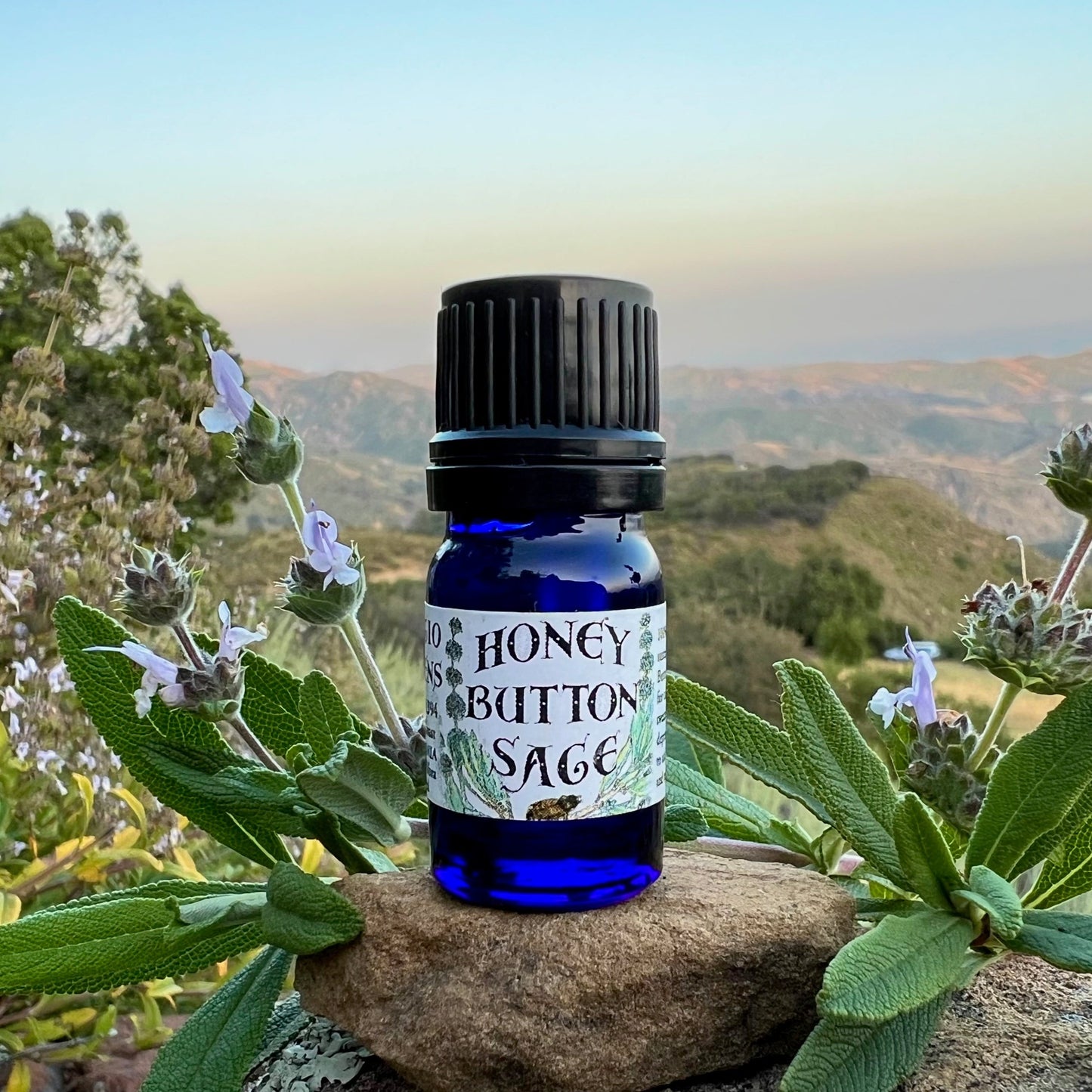
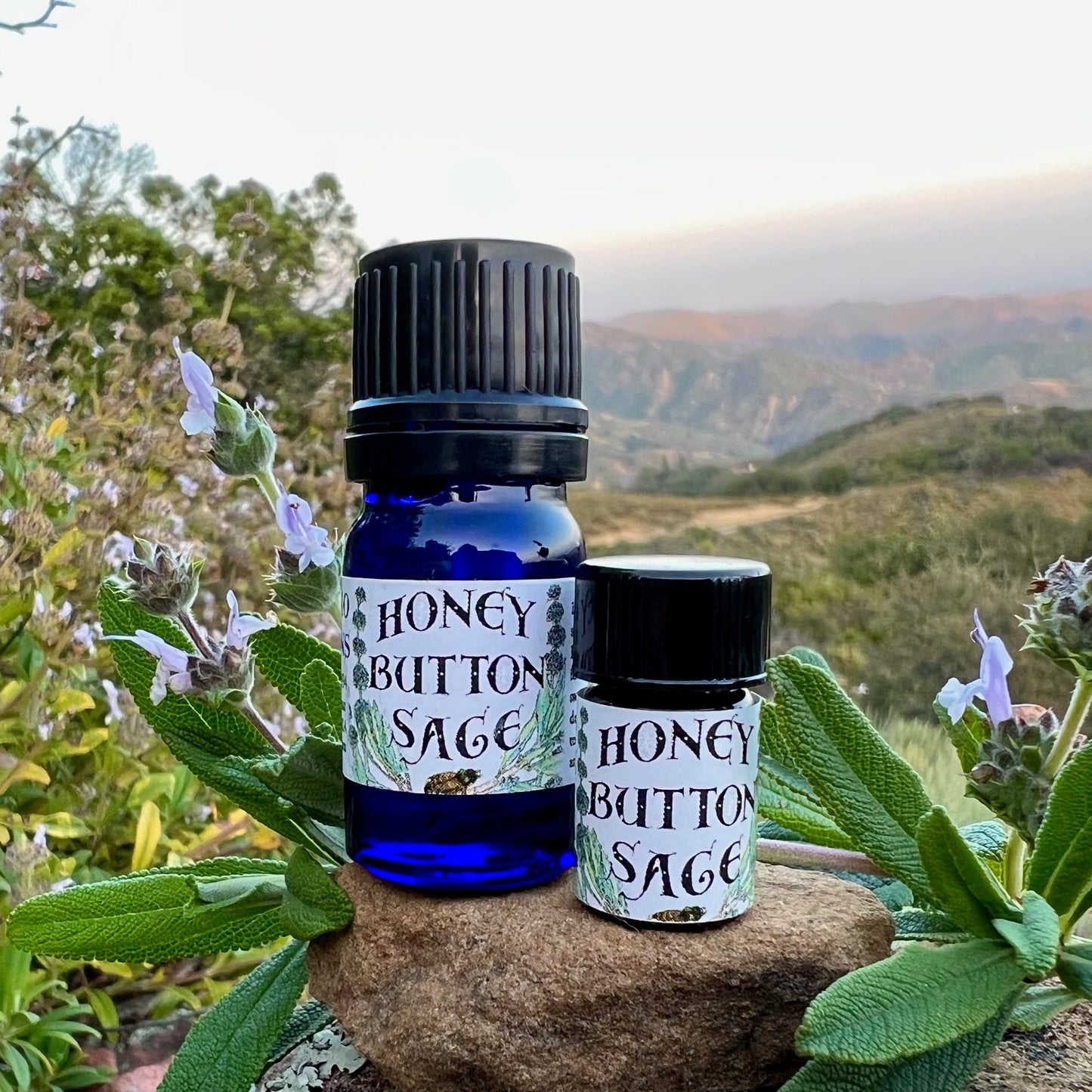
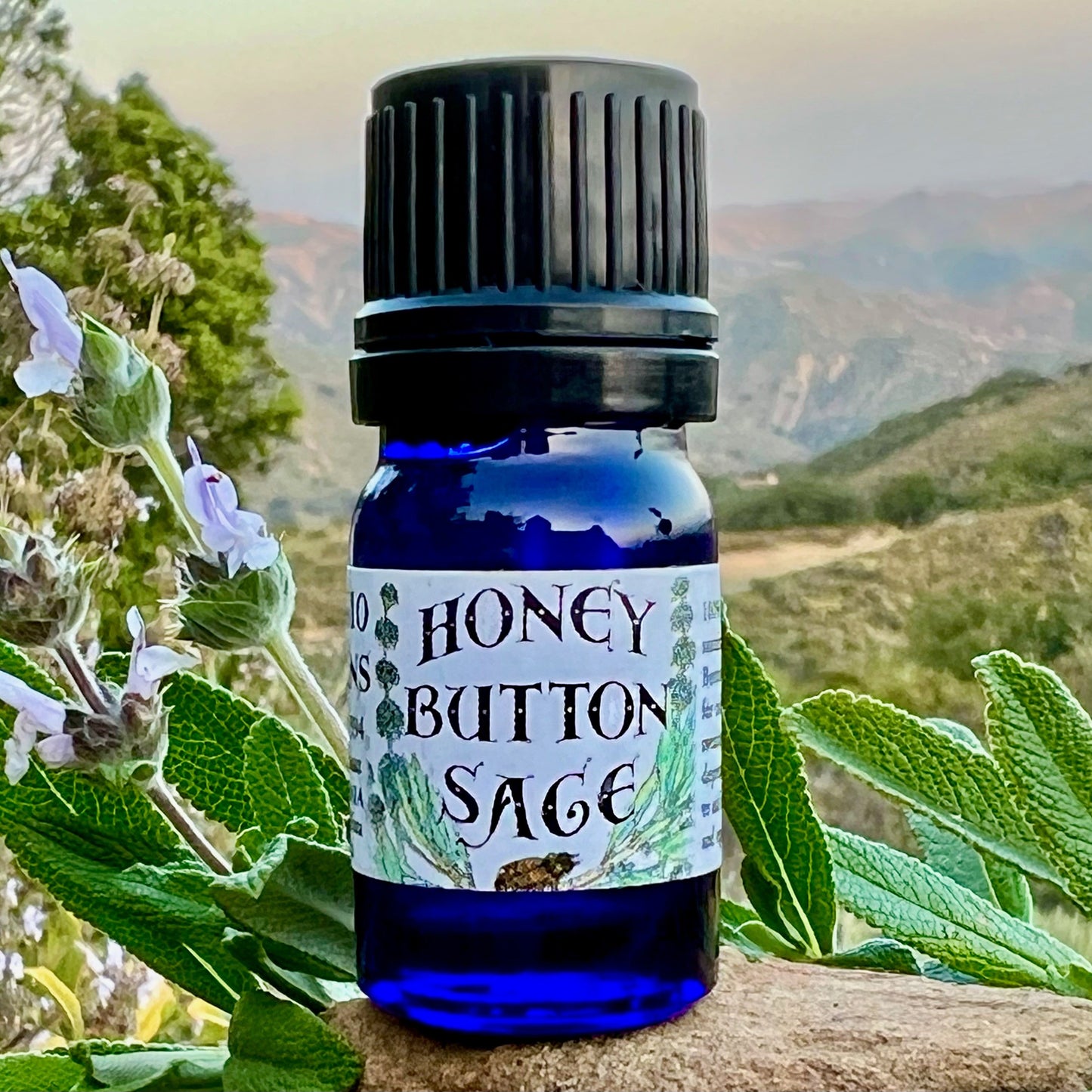
Honeybutton Sage Essential Oil – Sustainably Wild Grown, Artisan-Distilled, Pure & Genuine (Salvia mellifera)
Honeybutton Sage Essential Oil – Sustainably Wild Grown, Artisan-Distilled, Pure & Genuine (Salvia mellifera)
Couldn't load pickup availability
Salvia mellifera — Honeybutton Sage
Salvia mellifera Greene (syn. Audibertiella mellifera (Greene) Briq.)
Common names: Black Sage, Button Sage, Honey Sage
Family: Lamiaceae (Mint Family)
Pharmaceutical name: Herba Salviae Melliferae
Experience Honeybutton Sage Firsthand
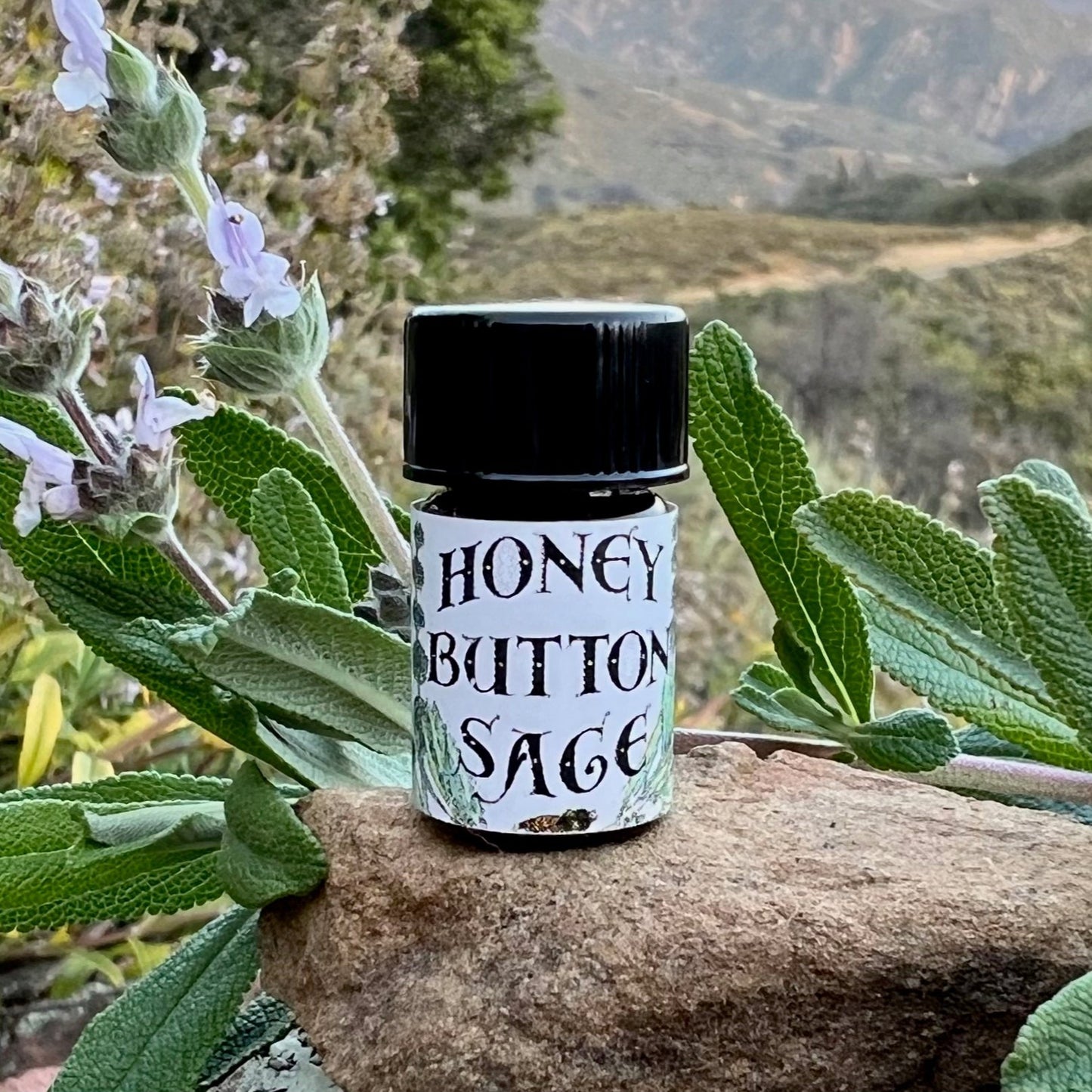
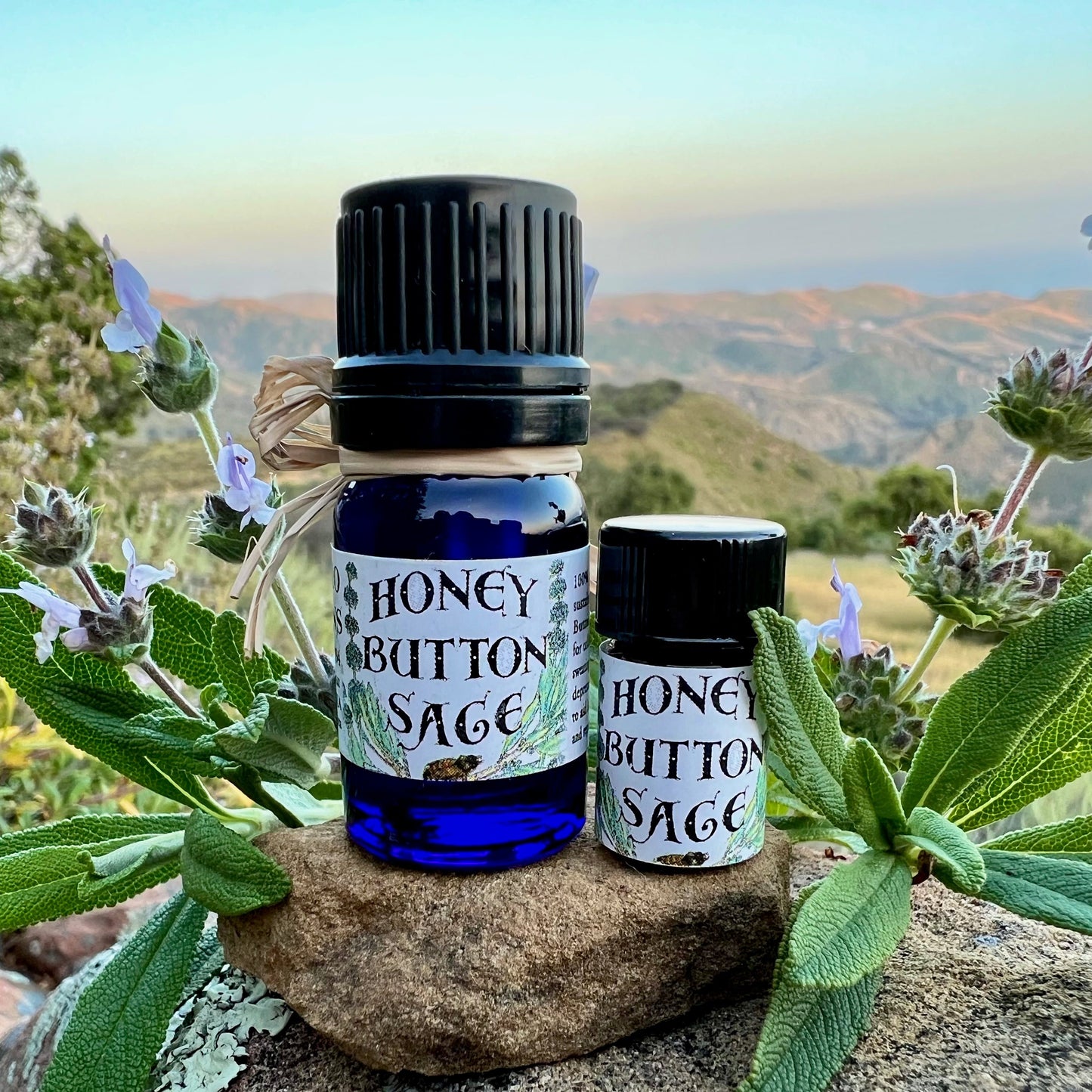
Explore our Honeybutton Sage Essential Oil, sustainably wildharvested and artisan-distilled on our Refugio Gardens ranch in Santa Barbara County. This rare, genuine oil carries the warm, resinous, camphoraceous aroma of wild chaparral — grounding yet invigorating, clarifying yet stabilizing.
Characteristics
- Plant: Pungent, sweet, aromatic, slightly bitter; distinctly cooling (numbing) on the tongue
- Essential Oil: Bright camphoraceous-pine top notes deepening into warm resinous-medicinal sweetness with a honeyed undertone; clean, herbaceous dry-down
- Hydrosol: Softer and rounder than the oil, with floral-green nuances and a distinctly sweet, slightly bitter taste; retains the numbing-cooling quality of the fresh plant
Channel Tropism (TCM)
- Lung
- Liver
- Spleen
- Large Intestine
Nature: Cool (numbing). Tastes: Pungent, sweet, aromatic, slightly bitter. Energetic action: Releases the Exterior, Clears Wind-Heat, Cools Heat, Moves Qi.
Species distinction: Unlike Dalmatian Sage (S. officinalis), which is warming, thujone-driven, and active on the uterus and nervous system, Honeybutton Sage is cooling and numbing — better suited to Wind-Heat patterns (fever, sore throat, inflammation). Confirmed by GC-MS to contain no thujone whatsoever, eliminating the neurotoxicity concern associated with garden sage — though its high camphor content remains its own consideration.
Western Actions
Carminative, antiseptic, astringent, analgesic, anti-inflammatory, antimicrobial, antioxidant, respiratory antiseptic, mucolytic, tissue regenerative, mild emmenagogue
Traditional Actions & Indications
- Releases the Exterior & Clears Wind-Heat: Fever with cough and sore throat; supports mucociliary clearance and respiratory comfort
- Regenerates Tissue & Benefits the Skin: Damaged or blemished skin; the antimicrobial and anti-inflammatory constituents support skin repair in salves, balms, and spot applications
- Alleviates Pain & Clears Heat: Traditionally applied as poultices and foot soaks for sore throat, earache, rheumatism, and joint discomfort — validated by modern research on camphor's cooling-analgesic mechanism
- Respiratory Support: Diffusion traditionally used for common cold and sore throat
- Hormonal Balance: Traditionally applied (diluted) to the nape of the neck for menstrual and menopausal support — an anecdotal use now under formal investigation
Cautions & Contraindications
- Pregnancy & Lactation: Contraindicated — the oil is 30.62% camphor, which crosses the placenta and is associated with fetal toxicity. Avoid during lactation due to insufficient data. Hydrosol and tea may be used in moderation with professional supervision.
- Topical Dilution: Maximum 2–3% for body application (12–15 drops per 1 oz / 30 mL carrier oil); 1% (5–6 drops per ounce) for face and broad-area application. Patch test at intended dilution before use.
- Internal Essential Oil: Not recommended given the 30.62% camphor content. The hydrosol is the safer internal vehicle.
- Children Under 10: Avoid — camphor and 1,8-cineole carry elevated risk in pediatric populations. Diffuse only in ventilated spaces, never in enclosed children's rooms.
- Seizure Disorders: Avoid — camphor lowers seizure threshold
- Inhalation: Limit diffusion sessions to 30 minutes, 2–3 times daily with ventilation. Not for continuous diffusion.
- Allergies: Cross-reactivity possible with other Lamiaceae (mint family) species; patch test before use
- Duration: Max 2 weeks continuous internal (hydrosol) use, then reassess
- Shelf Life: Approximately 4–5 years stored in amber glass; aroma degradation signals by harshness or loss of the sweet-green resinous character
Clinical Information
- The hydrosol mist is reported as strengthening and cleansing for the face and hair; the essential oil is reported to aid skin tissue regeneration and clear blemishes
- Diffusion has been traditionally successful for common cold and sore throat
- Clients describe the oil as "clarifying yet stabilizing" — supportive for meditation, breathwork, and creative focus
- Traditional sun-tea foot soaks, validated by contemporary pharmacological research on the plant's analgesic mechanisms, remain a signature preparation for chronic discomfort
Essential Oil & Hydrosol Treatment Protocol
Topical Use
- Always patch test first at intended dilution (2 drops in 1 teaspoon carrier oil, inner forearm, wait 24 hours)
- Body: 12–15 drops per 1 oz (30 mL) carrier oil ≈ 2–2.5% dilution
- Face: 5–6 drops per 1 oz ≈ 1% dilution
- Nape of neck (hormonal support): 1 drop in 1 teaspoon carrier oil, applied to the occipital region
- Maximum continuous duration: 2 weeks
Internal (Traditional Hydrosol Use)
The hydrosol is the preferred internal vehicle given its reduced camphor load. Two tablespoons in 1 liter of water, sipped throughout the day, for cough, fever, sore throat, and respiratory congestion. Maximum 2 weeks continuous use. Not for pregnancy, seizure disorders, or children under 10.
Tea Preparations
Steep 1–2 teaspoons dried leaves in 8 oz hot water for 10 minutes. This whole-plant preparation extracts non-volatile diterpenes (carnosic acid, carnosol) not present in the essential oil, providing anti-inflammatory and antioxidant activity distinct from the oil. Drink 1–3 cups daily.
Inhalation
Diffuse 30 minutes, 2–3 times daily, for congestion and respiratory support — avoid continuous diffusion given the camphor content. Steam inhalation: 2–3 drops in a bowl of hot water, tent with towel, inhale 5–10 minutes with eyes closed.
Bath or Poultice
Prepare a strong decoction (handful of leaves simmered 15 minutes); soak a cloth and apply warm to sore throat, ear, or painful joints. Crushed fresh leaves may be applied directly as a traditional heated-leaf poultice.
Personality
Black sage is a plant of duality: it burns homes and heals bodies. Beloved by herbalists and hikers, begrudged by brush clearers, its pale lavender "buttons" blacken in summer and detach in wildfire heat to sail on updrafts like little coals — earning its fearsome reputation even as it perfumes the coastal air. And yet it was a favorite of mothers and grandmothers: steam from the leaves treated colds, boiled paste eased poison oak, and Chumash mothers reached for it for fever, sore throat, and hormonal balance (Adams & Garcia, 2005; Timbrook, 2007). It is the most common sage in California and the rarest in essential oil commerce — a warrior-healer of the chaparral that grounds and clarifies, numbs and awakens.
Discovery & Innovation
In 1997, Dr. Amy Inez Hazard performed the first known artisan steam distillation of Salvia mellifera, capturing its essential oil for the first time. While the plant was long valued in Native Californian tradition for teas, poultices, and smudges, its essential oil was previously unrecorded. The initial distillation revealed a resinous, camphoraceous, slightly peppery-green oil with remarkable grounding and clarifying effects.
Today, Refugio Gardens continues to produce small-batch, GC–MS verified distillations, remaining the first and only known commercial source of this rare California native essential oil.
Modern Research on Honeybutton Sage
Research on Salvia mellifera highlights antioxidant and protective abietane diterpenes (carnosic acid, carnosol) extracted by teas and poultices, alongside ursane-type triterpenes — compounds shared with rosemary and Dan Shen that activate the body's own antioxidant defenses and calm inflammatory signaling. The essential oil itself is dominated by camphor and 1,8-cineole: camphor is now understood to relieve pain by activating the body's cold-sensing channels, while cineole is among the most clinically substantiated of all essential oil constituents for respiratory support. Notably, no prior published chemical analysis of this species existed before the 2023 Refugio Gardens verification — making each batch a genuine first. †
Ethnobotany
- Chumash (Santa Barbara region): Sun tea of stems and leaves rubbed on painful areas or used as a foot soak; antiseptic, astringent, and tonic for fever, sore throat, acne, indigestion, menopause, and hormonal imbalance (Adams & Garcia, 2005; Timbrook, 2007)
- Costanoan/Rumsen/Mutsun: Chewed green leaves for gas pains; heated-leaf poultice for earache; decoction for coughs; bathed in leaf decoction for paralysis; poultice to the neck for sore throat (Bocek, 1984)
- Mahuna: Infusion for chronic bronchial coughs (Romero, 1954)
- Kashaya Pomo: Infusion as an eyewash (Goodrich & Lawson, 1980)
- Traditional use emphasized medicinal application over ceremony — in contrast to the more ceremonial role of white sage (Timbrook, 2007)
Ecological Role
Honeybutton Sage is a keystone shrub of California's coastal sage scrub, stabilizing slopes with deep woody roots and anchoring pollinator networks with its nectar-rich flowers — among the most important honey plants in southern California. It regenerates after fire through both basal sprouting and fire-cued seed germination, and its famous "buttons" detach in fire updrafts to reseed the landscape. Featured on the Wallis Annenberg Wildlife Crossing as a keystone species for habitat connectivity.
Wild-Grown Potency & Terroir
Refugio Gardens harvests from established stands on private ranch land in the Santa Barbara County coastal mountains, where coastal fog, mineral-rich sedimentary soils, and Mediterranean rhythms shape the plant's chemistry. Our 2023 GC-MS analysis confirmed a monoterpene-dominant profile exceeding 88%, with camphor (30.62%) and 1,8-cineole (28.12%) together comprising nearly 59% of the oil — a camphor/cineole chemotype with complete absence of thujone, verified with no adulteration detected.
Experience Wild California
Let the warming herbal-camphor scent of Honeybutton Sage connect you with the chaparral's rugged spirit — wild California in a bottle. Our sustainably wildharvested Honeybutton Sage Essential Oil is pure, genuine, and artisan-distilled in small batches at Refugio Gardens.
Major Known Essential Oil Constituents
Source: 2023 GC-FID/MS analysis by Laboratoire PhytoChemia (Quebec, Canada), Lot #623, Exp. 8-2028. Refractive Index: 1.4692 ± 0.0003 (20 °C). Consolidated total: 99.41%. No adulteration, contaminant, or diluent detected. Sample sourced from Santa Barbara, CA.
- Camphor (30.62%)
- 1,8-Cineole (28.12%)
- β-Pinene (9.45%)
- α-Pinene (7.83%)
- Camphene (5.17%)
- (Z)-β-Ocimene (4.25%)
- γ-Terpinene (2.68%)
- Limonene (2.59%)
- Myrcene (1.51%)
- para-Cymene (1.05%)
- Plus [X] trace constituents (<1%)
Honeybutton Sage FAQ
What is Honeybutton Sage essential oil?
An artisan-distilled oil from Salvia mellifera with a warm, resinous, camphoraceous fragrance — the first and only known commercial essential oil from this California native sage. Unlike garden sage, it contains no thujone.
What does it smell like?
It opens with a bright camphoraceous-pine burst, deepens into warm resinous sweetness with a subtle honeyed undertone, and finishes with a clean, herbaceous dry-down. It blends beautifully with conifers, citrus, and rosemary.
How do I use it safely?
Diffuse in 30-minute sessions with ventilation, or dilute before topical use (2–3% for body, 1% for face). Patch test first. Not for use during pregnancy, in children under 10, or with seizure disorders. Internal use of the essential oil is not recommended.
How is it different from common garden sage oil?
Garden sage (S. officinalis) contains 0.5–6% thujone, a neurotoxic compound driving its safety limits. Honeybutton Sage contains none — its chemistry is built on camphor and cineole instead, giving a cooling, clarifying character. The tradeoff is its high camphor content, which requires respectful dilution.
Is it sustainably sourced?
Yes. Only selective flowering tops are gathered — no more than 10–20% of any stand — protecting regrowth and pollinator habitat. All batches are small-scale artisan distillations on private Santa Barbara ranch land.
Is it verified?
Every batch is third-party GC-MS analyzed. Our Lot #623 (2023, Laboratoire PhytoChemia) verified 99.41% identified constituents with no adulteration, contaminant, or diluent — the first chemical characterization of this species ever published.
What's the difference between the oil, hydrosol, and tea?
The essential oil delivers the volatile camphor-cineole fraction for diffusion and diluted topical use. The hydrosol offers a gentler aromatic profile suitable for internal use in moderation. The whole-plant tea extracts entirely different compounds — antioxidant diterpenes like carnosic acid — that don't exist in the distilled oil at all.
Disclaimer
This article is provided for educational purposes only. Honeybutton Sage has a long history of traditional use, but these statements have not been evaluated by the FDA. This content is not intended to diagnose, treat, cure, or prevent any disease. Always patch test; dilute before skin use. Consult a qualified practitioner if pregnant, nursing, or under medical care.
† For references and study details, see our References page.
Share
Safety & Cautions
Safety & Cautions
- Please be advised to keep essential oils out of reach of pets and children.
- Please avoid using photosensitive essential oils (Lemon, Lime, Grapefruit, Orange, Bergamot, Tangerine, Calm Shen Blend and any products made with these oils such as Santa Barbara Goldenbush Lotion) prior to going out in the sun or using a tanning booth as they can react to sunlight and cause something similar to a severe sunburn.
- It is advised to void continuous long term use of the same essential oils.
- Be sure to research the powerful effects of essential oils before use.
- Use diluted essential oils on the skin (Carrier oils like Jojoba are great for this in a 10% essential oil to 90% carrier base oil ratio).
- It is advised to patch test on a small portion of sensitive skin and discontinue if there is irritation or a negative reaction.
- Please know the safety data and specific warnings on an individual oil or Blend before using.
- And please use careful caution using essential oils during pregnancy. Any use should be approved by a medical provider.
- Its important to keep essential oils away from your eyes. If oil does get in your eye, do not flush it out with water. You can dilute the area immediately with vegetable or carrier oil by placing the vegetable oil on a tissue and gently wiping the eye area.
- Also essential oils are flammable so please avoid direct contact with flames such as candles.
- Please do not use essential oils internally unless properly trained and prescribed by a physician. If accidentally swallowed, call the Poison Control Center (1-800-222-1222) immediately and do not induce vomiting.
captures it perfectly
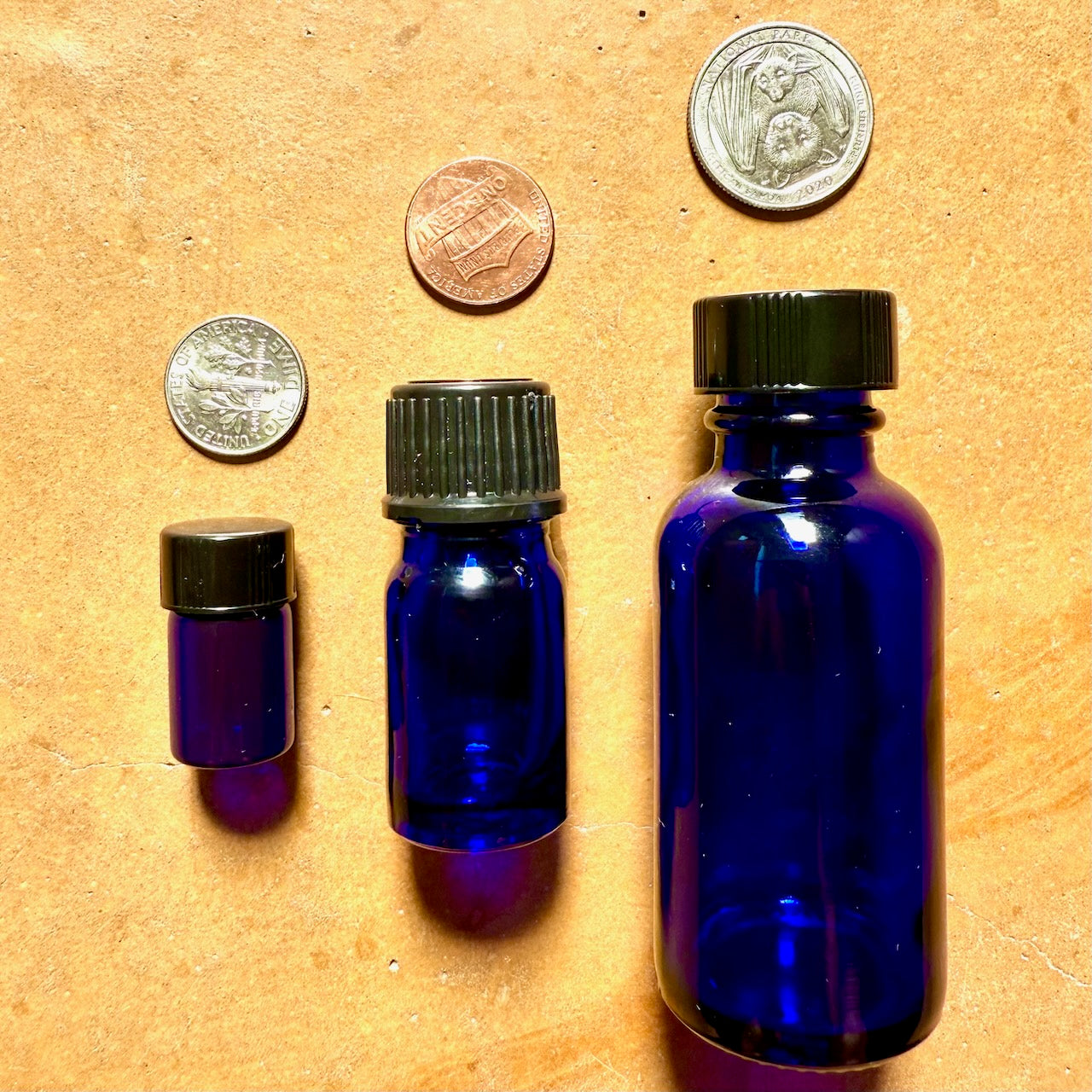
When I opened the package I almost threw out the essential oil they were so small. The scent just smells like eucalyptus
Love the essential oils from this garden! Smells divine in the diffuser.